James Hagen Crisis Care Center
Project Overview
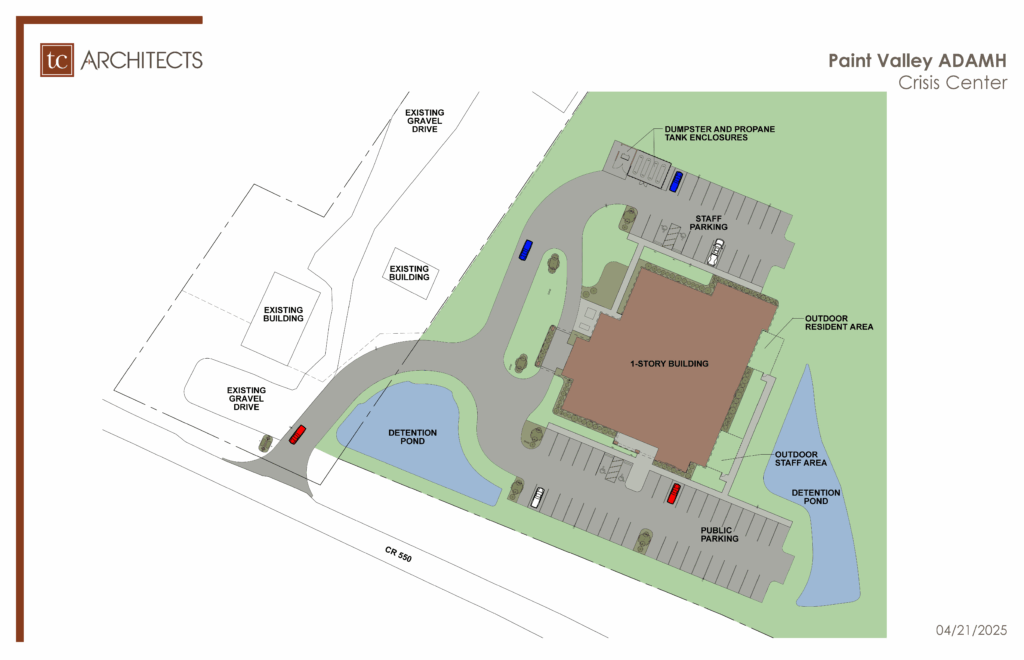
In 2022, the Paint Valley Alcohol, Drug, and Mental Health (PVADAMH) Board conducted an assessment with TBD Solutions (consultant) of the 5 county region’s crisis continuum. This assessment resulted in three recommendations / strategies on how to improve the crisis continuum within the board’s region, including implementing three (3) crisis services: a 23-hour observation unit to provide walk-in/drop off crisis support to adults during the acute phase of a behavioral health crisis; a crisis stabilization unit (CSU) for a less restrictive option than an inpatient hospital for adults; and implementation of mobile crisis teams to provide community-based behavioral health crisis intervention to adults, youth and adolescents. The strategies identified in the 2022 Assessment align closely with the State of Ohio’s Crisis Systems Landscape Analysis conducted in 2023, along with national standards and guidance to improve crisis services as recommended by SAMSHA’s National Guidelines for a Behavioral Health Coordinated System of Crisis Care. In 2023, the Paint Valley ADAMH Board secured American Rescue Plan Act funding through the Ohio Department of Mental Health and Addiction Services in the amount of $7,962,700 to support the design, construction, and implementation of the crisis services in the Paint Valley ADAMH Board region.
Project Impact on Community and Outcomes
Crisis Stabilization Services Overview
23-Hour Observation
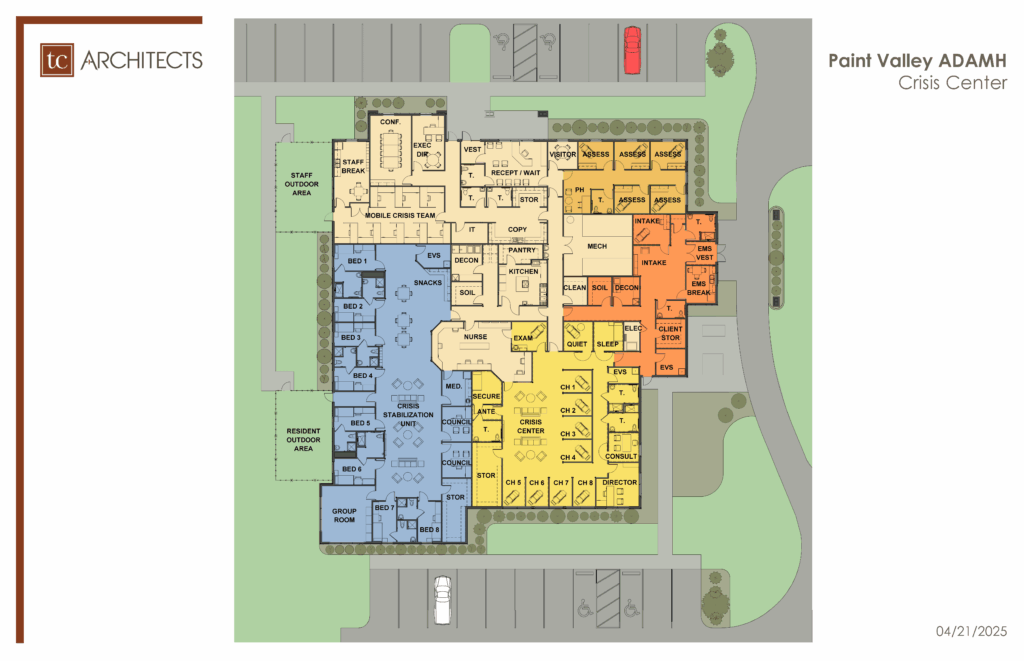
23 hour chairs are used for an individual in crisis where they need to have a mental health assessment completed within 23 hours while focusing on the individual receiving a less than acute level of care. The crisis center will house capacity for eight (8) 23 hour observation chairs. Once individuals are assessed, the most appropriate level of care can be coordinated by the crisis center staff.
Mobile Response and Stabilization Services (MRSS)
Mobile Response and Stabilization Services (MRSS) provide immediate behavioral health services, at home or another safe location, for children, youth, and young adults 21 and under who experience significant behavioral or emotional distress. MRSS teams are staffed with qualified individuals, case workers, and licensed clinicians who respond to your location. The program strives to establish individual and family safety; maintaining youth in the least restrictive setting; diverting children from hospital emergency rooms and inpatient hospitalization; keeping young people safe at home, in the community, and in school whenever possible, and assisting youth and families in learning new skills and building supports to reduce the frequency and intensity of future crises. MRSS services are funding by the Ohio Department of Mental Health and Addiction Services through the MRSS Ohio program. For more information, visit mrssohio.org
Mobile Crisis Team
Mobile Crisis Teams (MST) are housed at the crisis center and deployed to individuals experiencing a mental health crisis to provide immediate, on-site assistance, which includes de-escalation, onsite assessment, and referral to appropriate level of care. MSTs work with local law enforcement, schools, employers, families, and others who call on the mobile team to assist in crisis intervention and response. The mobile crisis teams will consist of a team of peer supporters, clinicians, and caseworkers who can meet individuals where they are and assist immediately with helping the individual in crisis receive the most appropriate level of care. Mobile Crisis Teams can make referrals to the 23 Hour Observation Unit or CSU when necessary.
Crisis Stabilization
A Crisis Stabilization Unit (CSU) provides short-term, intensive, non-hospital inpatient care for individuals experiencing a mental health crisis. CSUs are designed to stabilize individuals quickly with stays averaging 2-14 days with goals to return individuals to their home or a less restrictive level of care. In some cases, individuals may need to be placed into a long-term or another appropriate level of care. The crisis center will house eight (8) beds in the CSU.
Data and Research that Supports the Project
-
TBD Solutions / PVADAMH Crisis Continuum Assessment 2022
In 2021, the Paint Valley ADAMH Board contracted with TBD Solutions to conduct a comprehensive assessment of the region’s crisis continuum and provide recommendations for developing, enhancing, and sustaining behavioral health crisis services. Based on a comprehensive assessment of the current system, review of data, input from community stakeholders, and consideration of best practices for an effective crisis continuum, the assessment identified the need to expand crisis services and capacity including developing a 23-hour crisis observation unit, a crisis stabilization unit, and adult and youth mobile crisis teams.
-
Ohio's Behavioral Health Crisis Systems Landscape Analysis 2023
Under leadership of Governer Mike Dewine and the RecoveryOhio initiative, the Ohio Department of Mental Health and Addiction Services, along with key stakeholders and partners, conducted the 2023 Crisis Landscape Analysis to identify areas for improving Ohio's crisis system services aimed to assist Ohioans and their families for easier access to mental health crisis services. This assessment identified 4 principles to building Ohio's crisis services systems, Connect, Respond, Stabilize, and Thrive. Within this report details of the assessment along with the strategies Ohio is currently implementing to increase mental health crisis continuum services across the state.
Read Ohio's Behavioral Health Crisis Systems Landscape Analysis 2023 here.
-
RI International Consulting
Consultants from RI International assisted the Paint Valley ADAMH Board in the planning and design of crisis stabilization services and provided consulting services during the design phase providing best practices and design standards to incorporate into the design of our facility. RI International has become a national leader in crisis services with a global footprint serving throughout the United States and abroad and continue to be at the forefront of helping establish national standards for crisis response and care.
-
2025 National Guidelines for Behavioral Health Coordinated System of Crisis Care
The Substance Abuse and Mental Health Services Administration (SAMSHA) has continued to lead national efforts in expanding crisis continuum services over the years. In 2025, SAMSHA published the most recent national guidelines titled "2025 National Guidelines for a Behavioral Health Coordinated System of Crisis Care". Evidence-based practices, concepts, and best practices identified the guidelines were used in the planning and design of the crisis services to be offered at the crisis center. The Guidelines are centered around 3 main elements, 1) Someone to Call (988), 2) someone to respond (Mobile crisis teams), and 3) A Safe Place for Help: Emergency and Crisis Stabilization Services.
Design Team Members
TC Architects
430 Grant Street
Akron, OH, 44311
Paint Valley ADAMH Board
394 Chestnut Street
Chillicothe, OH 45601
Coleman Health Services
5982 Rhodes Road
Kent, OH 44240
RI International
(Consultant)
2701 N. 16th Street, Suite 316
Phoenix, AZ 85006
Ohio Department of Mental Health and Addiction Services
30 E. Broad Street
Columbus, OH 43215
Construction Team Members
TC Architects
430 Grant Street
Akron, OH 44311
GC- Lehman Daman Construction Services, INC
975 Eastwind Drive, Suite 130
Westerville, OH 43081
Paint Valley ADAMH Board
394 Chestnut Street
Chillicothe, OH 45601
Coleman Health Services
5982 Rhodes Road
Kent, OH 44240
Ohio Department of Mental Health and Addiction Services
30 E. Broad Street
Columbus, OH 43215
Meet the Provider: